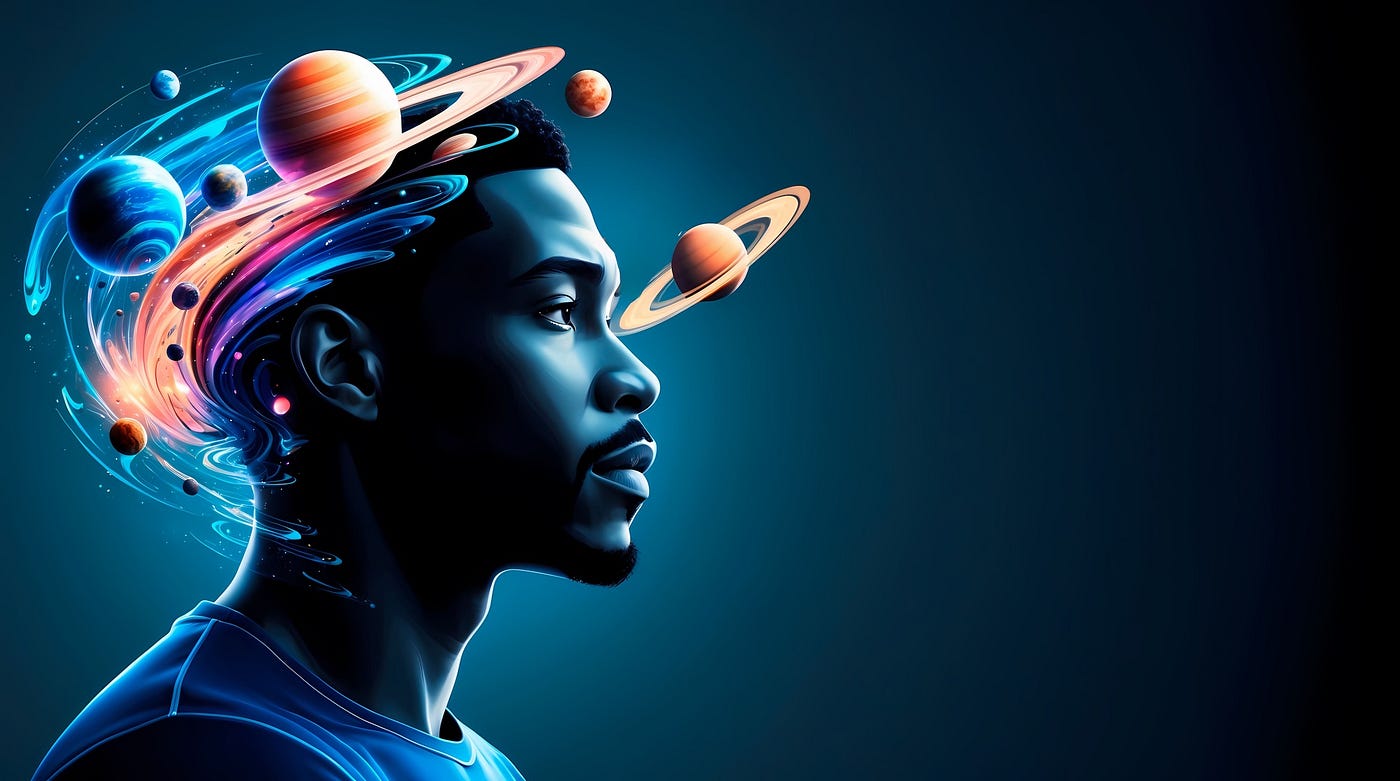
Blurring Boundaries: When AI and Art Collide
The integration of advanced computational intelligence into the creative realm marks a significant shift in how we conceive and produce art. Beyond merely serving as efficient tools, these technologies are becoming co-creators, challenging traditional notions of creativity and redefining aesthetic boundaries.
The Evolution of Visual Storytelling and Narrative Consistency
In the past, one of the significant challenges with digital media production was maintaining narrative coherence. Early generative technologies often struggled with consistency, leading to noticeable discrepancies between frames that disrupted the immersive experience of storytelling. However, developments in multi-image fusion and enhanced modeling have revolutionized the field.
Modern systems can now create seamlessly integrated characters and environments across entire visual presentations. This advancement allows filmmakers to design and maintain character continuity effortlessly, even amid changing contexts or lighting conditions. As these tools handle the technical intricacies of movie-making, creators can focus on deepening the narrative and exploring emotional depth, thus enhancing the viewer's engagement.
This creative landscape's transformation offers opportunities for independent creators to produce near-professional quality films without the extensive resources traditionally required. It's a democratization of storytelling, where the focus shifts from financial and technical constraints to the limitless potential of a creator's imagination.
The Symphony of Multimodal Creation and Co-Creation
Today's creative projects often transcend a single medium, integrating visuals, audio, and interactivity into cohesive experiences. This is where multimodal systems excel, enabling a fusion of diverse media to create richly immersive environments.
These intelligent engines understand the interplay between different creative forms, allowing for dynamic, real-time collaboration between human intent and machine execution. A designer, for instance, might sketch a concept, prompting the system to offer multiple stylistic interpretations. This does not stifle creativity but accelerates the process of exploration and iteration, enhancing the overall creative dialogue.
As these systems become integral to professional creative tools, the collaborative process becomes smoother and more intuitive. This integration into everyday workflows signifies a paradigm shift, moving the perception of these technologies from mere novelties to essential collaborators, capable of elevating the quality and creativity of artistic projects.
Strategic Creativity and the Question of Authorship
As AI technologies grow more sophisticated, they begin to engage not just in aesthetic creation but in strategic decision-making. In marketing, AI systems can analyze cultural and consumer data to devise content strategies optimized for impact and engagement. This capability blurs the line between human creative intent and machine-guided production, raising fascinating questions about authorship and originality.
If a system generates content based on predefined parameters, who truly owns the creative output? These discussions are central as we move forward in integrating AI into the creative economy. While the debate around copyright and intellectual property continues, the collaborative potential of these technologies can foster new forms of expression that enrich the artistic landscape, inviting us to reimagine integral aspects of artistry itself.
Symphony of Circuits: AI's Role in Music Creation
The realm of music is experiencing a profound transformation, with intelligent systems increasingly contributing not only as facilitators but as creative companions. This evolution expands the accessibility and expressive possibilities of music.
The Democratization of Musical Expression
For generations, the ability to compose music has been largely limited by the requirement for technical proficiency. However, generative audio tools are breaking down these barriers, allowing even those without formal training to create harmonious and richly textured compositions.
Modern platforms enable users to express musical ideas by humming a tune or describing a mood, which the software then translates into complete musical arrangements. This capacity democratizes music creation, unlocking the expressive potential of individuals who might otherwise be constrained by traditional skill gaps. As these tools continue to evolve, they facilitate cross-genre experimentation and pave the way for new hybrid styles, driven purely by creative vision.
Accelerating the Modern Studio Workflow
Professional producers are finding that generative music tools significantly enhance their productivity. These platforms operate like "text-to-music" engines, allowing creators to generate tailored audio tracks instantly based on descriptive prompts. This capability enables rapid iteration and refinement, crucial in fast-paced content environments.
While fears regarding job displacement exist, many professionals view these technologies as enablers that enhance creative roles. By automating routine tasks, these tools allow composers to focus on high-level artistic decision-making, much like how the advent of synthesizers opened new avenues for sound designers. The shift enhances the creative landscape, underscoring the fusion between advanced computation and human artistry.
Visualizing the Invisible: Theory and Notation
AI technologies are not only transforming music creation but also revolutionizing music education and analysis. Traditional music theory, with its complex rules and constructs, often poses a steep learning curve. Advanced algorithmic tools now make these concepts more accessible by providing intuitive, visual interpretations of musical structures.
These systems offer real-time analysis, helping learners visualize why particular chords evoke certain emotions or how melodies interact with underlying harmonies. Additionally, the technology has advanced to convert audio performances into precise sheet music dynamically, supporting composers who prefer playing by ear over formal notation. By bridging the gap between sound and structure, these systems enhance both musical literacy and creative exploration.
The Future of Multimedia and Performance
Intelligent music systems are poised to transcend the boundaries of audio, facilitating immersive multimedia experiences. Generative tools can now simultaneously create music and visual content, delivering synchronized and cohesive digital performances. This capability heralds a future where human musicians can collaborate with digital counterparts in live settings, each participant responding to the other's output in real-time.
These interactive performances blur the line between traditional and digital art forms, fostering a seamless dialogue between human creativity and machine precision. As technologies continue to mature, they promise new avenues for artistic exploration and audience engagement, where the collaboration between human and machine ignites unexpected creative sparks.
Digital Directors: The New Age of Film Editing with AI
Video production is experiencing a transformative era, driven by the advent of AI-based tools that offer unprecedented capabilities in editing, scene composition, and narrative structuring.
The Intelligent Co-Pilot: Structuring the Narrative
Intelligent systems can interpret scripts and storyboards, creating a cohesive narrative flow that enriches storytelling. By analyzing key plot points and character dynamics, these tools offer strategic visual treatments that enhance the emotional depth of a project.
This synergy between human creators and machines enables more focused and intuitive workflows. Creators engage in high-level dialogues with their systems, refining the emotional nuances of their projects without getting entangled in oft-tedious technical minutiae. The narrative structure becomes a collaborative creation, where human intuition and machine precision intersect, producing polished and engaging visual content.
Visual Alchemy: From Abstract Ideas to High-Fidelity Video
Generative video models are blurring the boundaries between editing and creation, allowing creators to generate complete visual sequences from broad concepts. These systems synthesize elements within specific project contexts, maintaining visual consistency across compositions. By marrying captured footage with generated content, creators experiment and innovate, given the newfound latitude these tools afford.
This capacity amplifies the storytelling and cinematic ambitions of creators. Directors can visualize and refine scenes prior to actual filming, transforming the conceptual phase into a dynamic and iterative process. Not only does this streamline production workflows, but it also encourages risk-taking and creative experimentation that previously may have been unaffordable or technically complex.
Democratizing the Director's Chair
AI advancements are democratizing high-quality film production, narrowing the gap between independent creators and established studios. By integrating cinematic expertise into accessible software, these tools empower creators to produce high-caliber stories without substantial budgets. Independent filmmakers can now compete on a level playing field, focusing on originality and creative uniqueness rather than financial or technical constraints.
This evolution suggests a future where creativity is judged primarily by its narrative quality rather than its production resources. The era of "viral-ready" content is emerging, with storytelling becoming increasingly accessible to diverse voices, each contributing uniquely to the global media landscape.
Wired Words: Exploring Machine-Generated Poetry
The fusion of artificial intelligence and literature is bringing forth a wave of machine-generated poetry, challenging our perceptions of creativity and authorship.
The Architecture of Algorithmic Rhyme
Machine-generated poetry emerges from language models that analyze vast corpora, learning the nuances of syntax, rhythm, and style. These systems adopt statistical approaches to synthesize text that adheres to poetic forms, transforming the creation into an intriguing dialogue between structure and art.
While the machine's output lacks experiential depth, its ability to mimic human thought patterns and linguistic creativity opens new avenues for poetic exploration. By emulating various stylistic elements, these systems push traditional boundaries, enabling poetry that mirrors human emotion and complexity through mathematical and linguistic elegance.
The Digital Muse and Creative Collaboration
Advanced generative tools act as collaborative partners in the creative process, offering inspiration and structure for poets. By suggesting continuations or variations, these systems accelerate creative evolution, providing authors with diverse stylistic possibilities to explore.
In the digital age, creation is becoming a richer dialogue where human and machine creativity coalesce. Writers serve as curators, shaping machine-generated material through their unique perspectives and emotional intelligence, fostering a symbiotic relationship that nurtures new forms of literary expression.
The Boundary Between Mimicry and Meaning
Machine-generated art occupies a unique place within the creative domain—it lacks the lived experiences that imbue human art with meaning yet offers reflections of our cultural and linguistic landscapes.
As creators, we are tasked with interpreting machine outputs as artistic reflections of human culture. Their ability to juxtapose familiar concepts in novel ways challenges our perceptions of originality and meaning. This dynamic fosters an appreciation of art not solely for its intended emotional depth but for its capacity to inspire curiosity and introspection, prompting new discussions about the essence and interpretation of creative works.
The integration of AI into the artistic process invites us to explore the untapped potential of human-machine collaboration, forging paths for unprecedented innovation and expanding the horizons of creativity.
Q&A
-
What are Neural Art Generators and how do they function?
Neural Art Generators are AI systems that use deep learning models, particularly neural networks, to create visual art. These systems are trained on vast datasets of artwork and learn to replicate styles and techniques. By inputting an image or style preference, users can generate unique artworks that blend various artistic elements, providing a new medium for creative expression.
-
How does AI-Generated Music differ from traditional music composition?
AI-Generated Music leverages algorithms and machine learning models to compose music. Unlike traditional composition, which relies on human creativity and emotion, AI systems analyze patterns in existing music to create new pieces. These systems can generate melodies, harmonies, and rhythms that may be novel or mimic specific styles, offering musicians a tool for inspiration and experimentation.
-
In what ways is AI-Based Film Editing transforming the film industry?
AI-Based Film Editing automates and enhances the editing process by using machine learning to analyze footage and suggest edits. It can improve efficiency by quickly organizing large amounts of video, identifying key scenes, and even recommending transitions and effects. This technology allows editors to focus more on creative decisions and storytelling, potentially reducing production time and costs.
-
What role does Deep Learning play in the creation of art?
Deep Learning for Art involves using neural networks to learn artistic styles and techniques from large datasets. This technology can generate new artworks, enhance existing ones, and even assist artists in developing unique styles. By understanding complex patterns and features in art, deep learning models can produce high-quality, original pieces that push the boundaries of traditional artistic methods.
-
How is AI in Design shaping modern creative industries?
AI in Design is revolutionizing creative industries by providing tools that enhance productivity and creativity. AI systems can automate repetitive tasks, generate design ideas, and even predict trends. This technology empowers designers to explore new possibilities, streamline workflows, and create more personalized and innovative products, significantly impacting fields such as graphic design, fashion, and architecture.