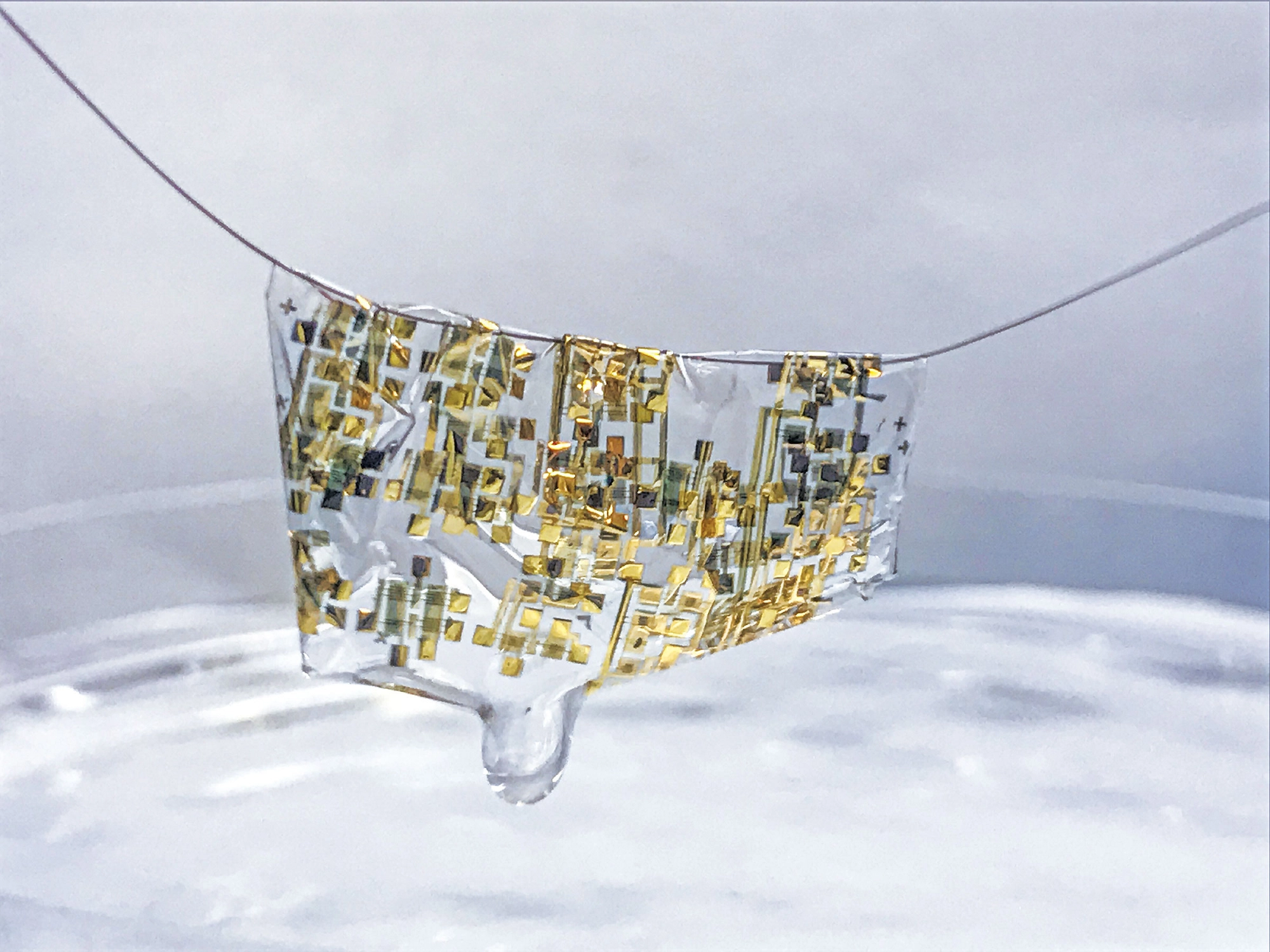
Exploring the Science and Possibilities
The transformation from traditional electronics to environmentally friendly designs is not just a dream but an evolving reality. At the heart of this transition are groundbreaking scientific innovations that promise to reshape how we perceive technology.
Advanced Functional and Degradable Materials
Today's pursuit of sustainable tech involves the integration of novel materials like organic compounds and polymers. Researchers are looking beyond conventional materials to create circuits and semiconductors from cellulose and silk, promising durability during use and decomposition when discarded. This innovative approach not only challenges our reliance on traditional silicon but also redefines how electronic components can be manufactured and disposed of.
A significant part of this scientific exploration includes harnessing biological materials such as melanin. Known for its conductivity and biodegradability, melanin is being analyzed for its potential use in electronic components. This natural pigment, abundant and non-toxic, presents opportunities for integrating electronics in medical applications where devices can perform highly specific functions before safely disintegrating within the body.
Achieving Stability and Degradability
A key challenge remains the delicate balance between maintaining device stability during its active life and ensuring rapid degradation after disposal. Advances in polymer science provide potential solutions, with biodegradable polymers designed to withstand environmental conditions without premature breakdown. These materials are being tested for various product lifespan scenarios, ensuring devices remain reliable and effective until their intended end-of-life conditions, such as exposure to specific types of bacteria or humidity, trigger degradation.
The ongoing development of biodegradable transistors and sensors from cellulose-based substrates marks a significant milestone in this field. Such technologies hold the promise of reducing the environmental persistence of electronic waste. By replacing traditional silicon-based components with compostable alternatives, these innovations contribute substantially to cutting down the amount of forever-lasting electronics in landfills.
Employing Intelligent Design and Computational Aid
The future of sustainable technology is underpinned by intelligent design processes driven by computational modeling. Leveraging machine learning and data analysis, scientists are able to explore countless potential configurations, significantly accelerating the discovery of materials that balance durability with eco-friendliness. By simulating molecular interactions, researchers can predict how new materials will perform before they're ever physically tested, reducing both resource consumption and experimental duration.
The application of computational techniques is particularly noteworthy in the search for eco-friendly materials. AI-driven approaches are being utilized to identify the ideal properties of organic materials that match, if not surpass, traditional electronic functionalities. These analytics play a vital role in optimizing materials for scalability and industrial viability, ensuring that the path from lab discovery to consumer product is both efficient and environmentally conscious.
Real-World Applications: From Prototype to Purpose
The shift to sustainable electronics represents an exciting frontier in technology. Real-world case studies exhibit how theory is being turned into practice across various sectors.
Compostable Devices in Action
Translating science into practical applications, research labs and forward-thinking companies are actively developing and deploying compostable electronics. This effort is evident in projects like MIT's compostable sensors used in agriculture. These sensors monitor temperature and humidity without leaving a long-term footprint, decomposing into the soil and enriching it post-use.
Such devices are pivotal in reducing electronic waste volumes, particularly in environmental monitoring. By ensuring that electronic components can disintegrate in composting conditions, these initiatives significantly lower the landfill burden and improve ecosystem health. Each successful deployment of these devices not only exemplifies technological progress but also showcases a commitment to ecological stewardship.
Challenges in Production and Deployment
The transition to compostable electronics involves overcoming notable production challenges. Ensuring that these devices can be produced cost-effectively and on a large scale without compromising reliability is a significant hurdle. Scaling up production requires refined manufacturing processes that accommodate the unique properties of biodegradable materials.
Efforts are underway to address these concerns by integrating systems and processes that not only support compostability but also maintain the reliability expected in consumer and medical electronics. Pioneering developments in this field may soon lead to a broader adoption of biodegradable devices in general consumer gadgets and healthcare equipment, expanding the scope of eco-innovation.
Environmental Impact and Green Policies
Biodegradable electronics offer environmental benefits that stretch beyond reduced waste. They represent a broader commitment to sustainability by addressing lifecycle impacts and promoting green policies.
Reducing Toxicity and Enhancing Ecosystem Health
Traditional electronics contribute to pollution through toxic leachates and residual microplastics. In contrast, green electronics minimize these impacts by utilizing materials that naturally break down without releasing harmful substances. Projects focusing on biodegradable chips are quantifying such benefits, noting significant reductions in pollution from conventional electronic waste.
The adoption of these technologies results in a decreased carbon footprint in both manufacturing and disposal phases, encouraging a cleaner technological landscape. By reducing hazardous components, biodegradable electronics protect ecosystems and enhance overall environmental quality, showcasing a progression from conventional manufacturing practices to earth-friendly solutions.
Policy and Integration into Circular Economies
The wider proliferation of biodegradable electronics depends on supportive policies and the integration into circular economic models. Initiatives supporting regulatory frameworks that incentivize compostable tech development are essential. Such policies can accelerate industry adoption by offering financial incentives or imposing stricter waste management regulations for non-biodegradable electronics.
As governments and international institutions recognize the negative health and environmental impacts of e-waste accumulation, they increasingly support measures that promote sustainable technologies. Aligning new tech innovations with these policy directions ensures that biodegradable electronics have the potential to move from niche innovation to widespread implementation, ultimately contributing to a sustainable future.
Future Directions: Technological and Economic Prospects
Biodegradable electronics are at the forefront of sustainable tech evolution, with numerous promising trends indicating future developments.
Innovations in Energy Harvesting and Usage
Future advancements will likely focus on how biodegradable electronics harness and consume energy efficiently. With a growing emphasis on self-powered devices, researchers are exploring alternatives like organic solar and piezoelectric materials that convert environmental movements into electrical energy.
These innovations are critical for reducing reliance on toxic, disposable batteries, offering devices that can function independently and responsibly throughout their lifecycle. Integrating such clean energy solutions within biodegradable frameworks not only enhances sustainability but also promotes longer device lifespans.
Economic and Market Expansion
The path to widespread biodegradable technology is intricately tied to economic incentives and market forces. As the demand for eco-friendly products rises, competitive cost structures coupled with advancing technology will facilitate market entry and expansion.
The scalability of biodegradable electronics will depend significantly on investments in research and infrastructure. By prioritizing sustainable tech, stakeholders from industry to government can drive forward the adoption of biodegradable solutions. This momentum will be crucial in transitioning from experimental prototypes to ubiquitous, everyday electronics.
As green technology turns towards a more circular and harmonious existence with nature, biodegradable electronics stand as beacons of what's possible when innovation and sustainability align. The fusion of cutting-edge science and committed eco-design offers a future where electronic devices not only empower human progress but also nurture the planet.
Q&A
-
What are eco-friendly circuits and why are they important?
Eco-friendly circuits refer to electronic circuits designed with materials and processes that minimize environmental impact. They are important because traditional electronic components often contain harmful substances that can lead to pollution and health hazards when disposed of improperly. By using sustainable materials and energy-efficient manufacturing processes, eco-friendly circuits help reduce electronic waste and conserve natural resources.
-
How do biodegradable chips contribute to sustainable tech?
Biodegradable chips are made from materials that can decompose naturally without harming the environment. These chips contribute to sustainable tech by reducing the amount of electronic waste that ends up in landfills. As they break down, they release fewer toxins and reduce the burden on waste management systems. This innovation supports a circular economy where materials are continuously reused and recycled.
-
What are the environmental impacts of traditional electronics?
Traditional electronics have significant environmental impacts due to the extraction of raw materials, energy-intensive manufacturing processes, and the generation of electronic waste. These impacts include soil and water pollution from hazardous substances, greenhouse gas emissions, and resource depletion. The improper disposal of electronics can also lead to toxic leachates contaminating ecosystems.
-
Can you give examples of compostable devices and their benefits?
Compostable devices are electronic products designed to break down into non-toxic components in composting environments. Examples include certain biodegradable sensors, mobile phone cases, and circuit boards made from natural fibers or biopolymers. The benefits of these devices include reduced landfill waste, minimized environmental toxicity, and the promotion of sustainable consumption practices.
-
What role do green electronics play in advancing sustainable technology?
Green electronics play a crucial role in advancing sustainable technology by prioritizing the use of environmentally friendly materials and processes. They help reduce the carbon footprint of electronic devices, promote the recycling and reuse of materials, and encourage the development of innovative solutions that align with environmental conservation goals. By adopting green electronics, companies and consumers can significantly contribute to a more sustainable future.