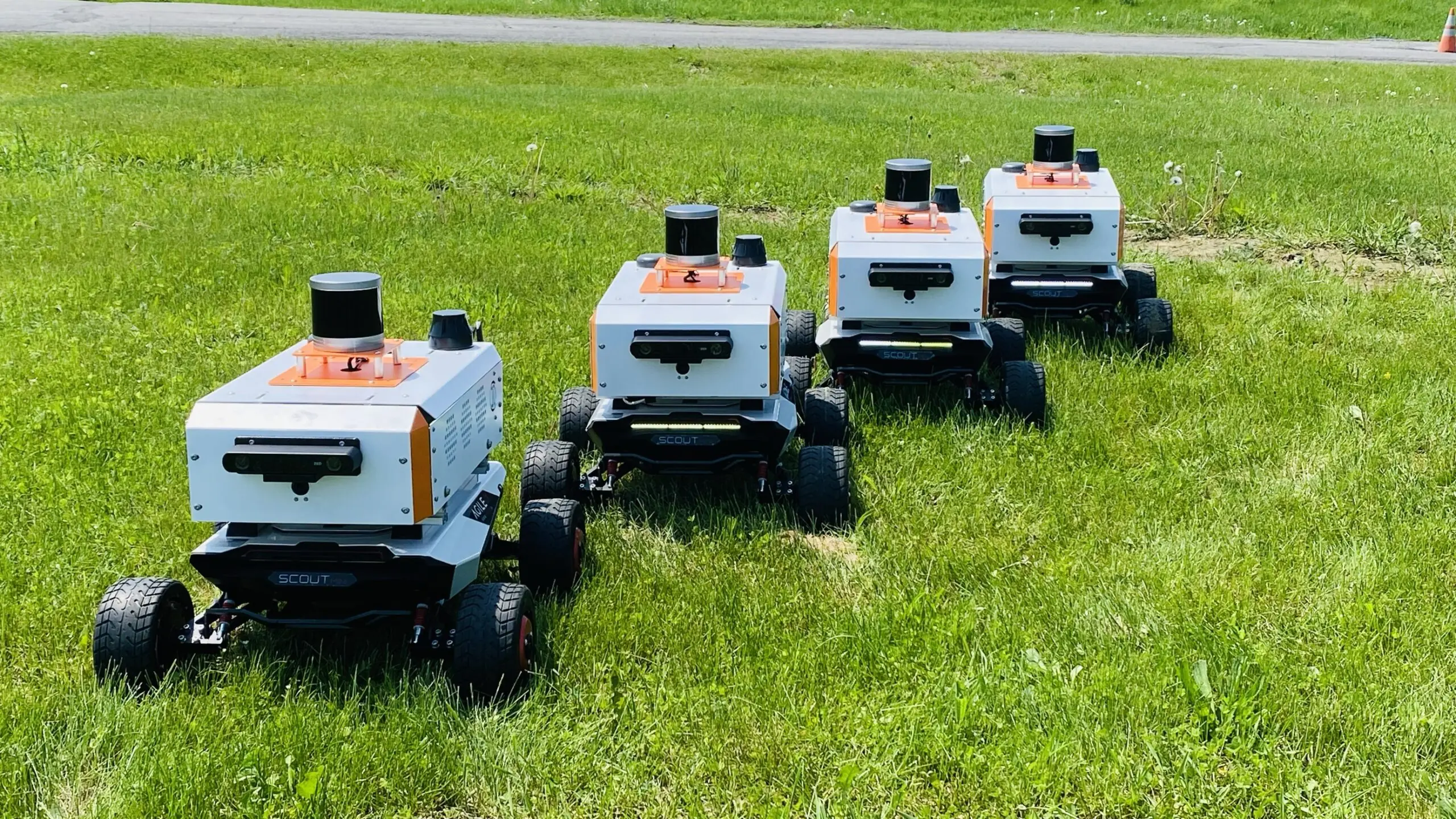
Exploring Nature's Blueprint: The Biological Inspiration
Understanding how swarm robotics has evolved requires a look at its roots in biological systems. Just as flocks of birds maneuver through the skies with astounding precision, robots are now being designed to achieve similar fluidity and adaptability by mimicking these patterns.
1. Ants, Bees, and Birds: Algorithms from Nature
The natural world offers a treasure trove of behavioral algorithms. Ants employ decentralized methods to solve complex navigation problems, while bees optimize resource collection through efficient communication. Birds demonstrate how simple local rules can prevent collisions even during rapid maneuvers.
Taking cues from these organisms, engineers are crafting algorithms that enable robots to exhibit these adaptive patterns. By translating instinctive behaviors into mechanical systems, robotic swarms achieve emergent conduct akin to natural sets. Through these models, individual units execute simple tasks, but collectively they solve complex challenges — from environmental monitoring to disaster relief — by seamlessly adapting to one another and their surroundings.
2. Emulating Natural Resilience
Nature has a remarkable ability for resilience. In a biological swarm, if one ant fails, another assumes its role, ensuring survival. Robotic systems aspire to this same robustness. For instance, incorporating redundancy allows robotic swarms to recover from unit failures. If a drone is lost due to harsh weather, remaining units reshape their pattern, maintaining mission efficiency.
These systems, by eliminating a single point of failure, enable significantly greater adaptability. Much like how natural systems leverage emergent behavior for survival, robotic swarms demonstrate resilience through dynamic interactions and self-healing strategies.
3. Ethical Implications and Control
The introduction of such autonomous systems also necessitates ethical considerations. As robots gain the capacity for independent decision-making, questions regarding safety, environmental impact, and moral responsibility arise. Engineers must ensure swarm systems do not disrupt ecological balances and adhere to ethical principles across applications.
Integrating ethical constraints into algorithms ensures systems remain aligned with human values. "Safety-by-design" principles guide system development to prevent unintended negative interactions. This includes creating collaborative protocols that maintain reliability even in unpredictable conditions.
From Warehouses to All Terrains: Real-World Impact
Swarm robotics is not limited to theoretical exploration; it is already revolutionizing practical applications. From warehouses to open fields, these systems are transforming how industries function with unprecedented efficiency and adaptability.
1. Logistics and Inventory Management Revolution
In logistics, robotic swarms offer groundbreaking efficiency gains. Traditional methods involved human workers laboring tirelessly, retrieving items across chaotic warehouse zones. Now, fleets of mobile autonomous units seamlessly navigate spaces, drastically improving order processing times.
These systems not only enhance efficiency but also adaptively respond to logistical demands. With real-time data synchronization, swarms optimize routes and workloads, minimizing downtime. If a segment of the swarm is halted due to equipment failure, alternate units swiftly fill the gap, preventing any substantial delay.
2. Beyond Indoor Environments
While warehouses present a controlled environment, swarm technology extends its influence into more chaotic, unpredictable domains. In agriculture, for instance, autonomous robots manage crop health and yield. They employ sensors to detect plant conditions, reducing chemical use by precisely targeting areas requiring attention.
In search and rescue operations, robotic swarms navigate treacherous or collapsed structures more safely and efficiently than humans. These machines cover expansive areas quickly, ensuring timely, critical discoveries. By dividing labor and continuously reassigning tasks based on the current situation, swarms can maintain their effectiveness even when individual units encounter obstacles.
3. Overcoming Challenges with Collaboration
A significant challenge lies in maintaining high efficacy as swarms scale. Communication reliability becomes critical, especially in expansive, open environments. Recent field applications demonstrate the need for robust collaboration protocols to manage congestion and resource distribution in densely packed robot swarms.
By employing advanced communication algorithms, systems balance the network load, ensuring seamless coordination. Strategies like bandwidth prioritization and real-time traffic updates maintain smooth and efficient operation, protecting data integrity across sprawling operations.
The Decentralized Future: Flexible and Resilient Fleets
The need for decentralized robotic systems becomes paramount as we aim to manage increasingly complex tasks across varied landscapes. Flexibility and resilience define this paradigm shift, where the collective is stronger than any single part.
1. Redefining Decision Making and Flexibility
In centralized systems, a failure in command can incapacitate entire operations. Conversely, decentralized swarms remain functional through mutual understanding and collaboration, offering a resilience unmatched by any individual control unit. Robotic fleets adaptively manage unforeseen challenges, reallocating resources to maintain collective productivity.
Scalability further enhances this flexibility. As missions require additional capacity, more units can simply be incorporated seamlessly into operations without complicated recalibrations. This attribute is vital for sectors like construction and disaster recovery, where demands can fluctuate dramatically.
2. Ethical Use and Accountability
Conducting autonomous operations brings questions of liability and ethical deployment. Ensuring ethical decision-making without human intervention requires precision in system design. Trust in these technologies is built through transparency and reliability.
Embedding ethical standards into the very fabric of swarm algorithms ensures responsible actions across diverse scenarios. This fosters public confidence by clarifying accountability when faults occur. By disseminating decision-making authority, swarm systems also resist malicious intervention, granting them credibility as safe, autonomously operating technology.
3. Realizing Advanced Applications
Today, swarm robotics enhances multiple sectors, from environmental management to complex logistics. Through continued refinement, ethical standards, and resilient designs, these technologies will continue to transform the landscape, driving progress that aligns with universal human-centric principles.
Advancements in this field will drive sustainable practices, conserve resources, and promote safety without compromising performance. This marks a transformative shift, where autonomous systems harmonize technology with the intricacies of the natural world, heralding an innovative age of robotic collaboration.
4. Bridging Engineering and Ethics
Navigating the intersection of technology and ethical compliance emerges as a cornerstone of swarm robotics. Ethical considerations influence every step, from experimental designs to real-world deployment, ensuring machines act as beneficial societal components.
Through robust algorithms combined with reliable oversight, swarm robotics paves a path toward industry-wide automation without sacrificing integrity. Adopting these ethical frameworks responsibly will set the precedent for sustained growth and acceptance of swarm robotics in broader contexts, culminating in a standardized model of technological harmony and efficiency.
Swarm robotics thrives on a foundation of collective progression, echoing the concert of nature where machines operate in true harmony with their environments. As this field matures, it stands poised to enhance productivity ethically across the global landscape, ensuring a future defined by collaborative potential and sustained innovation.
Q&A
-
What is distributed robotics and how does it differ from traditional robotics?
Distributed robotics refers to a system where multiple robots work together to accomplish tasks, often without a central control system. Unlike traditional robotics, which typically relies on a single robot performing a task, distributed robotics leverages the collective capabilities of multiple robots to enhance efficiency, adaptability, and robustness. This approach is particularly useful in complex environments where tasks can be divided and managed concurrently by different units.
-
How does autonomous swarm intelligence contribute to the development of collaborative robots?
Autonomous swarm intelligence is inspired by the behavior of natural swarms, like bees or birds, and is applied to develop collaborative robots that can operate in unison without direct human intervention. This technology enables robots to communicate and coordinate with each other in real-time, making decisions based on local interactions. Such capabilities allow collaborative robots to perform complex tasks such as search and rescue, environmental monitoring, and agricultural operations more effectively.
-
What are the advantages of using decentralized robotics in industrial applications?
Decentralized robotics offers several advantages in industrial applications, including increased system reliability and flexibility. In a decentralized system, each robot operates independently, which reduces the risk of a single point of failure that could halt operations. Additionally, decentralized systems can be easily scaled by adding more robots without the need for significant reconfiguration, making them ideal for dynamic and evolving industrial environments.
-
What role do swarm algorithms play in enhancing the functionality of robotic systems?
Swarm algorithms are crucial for enhancing the functionality of robotic systems by enabling decentralized decision-making and coordination among multiple robots. These algorithms allow robots to share information and adapt to new situations autonomously, improving their collective performance. Swarm algorithms are particularly beneficial in dynamic and unpredictable environments, where real-time adaptability and resilience are essential for successful task completion.