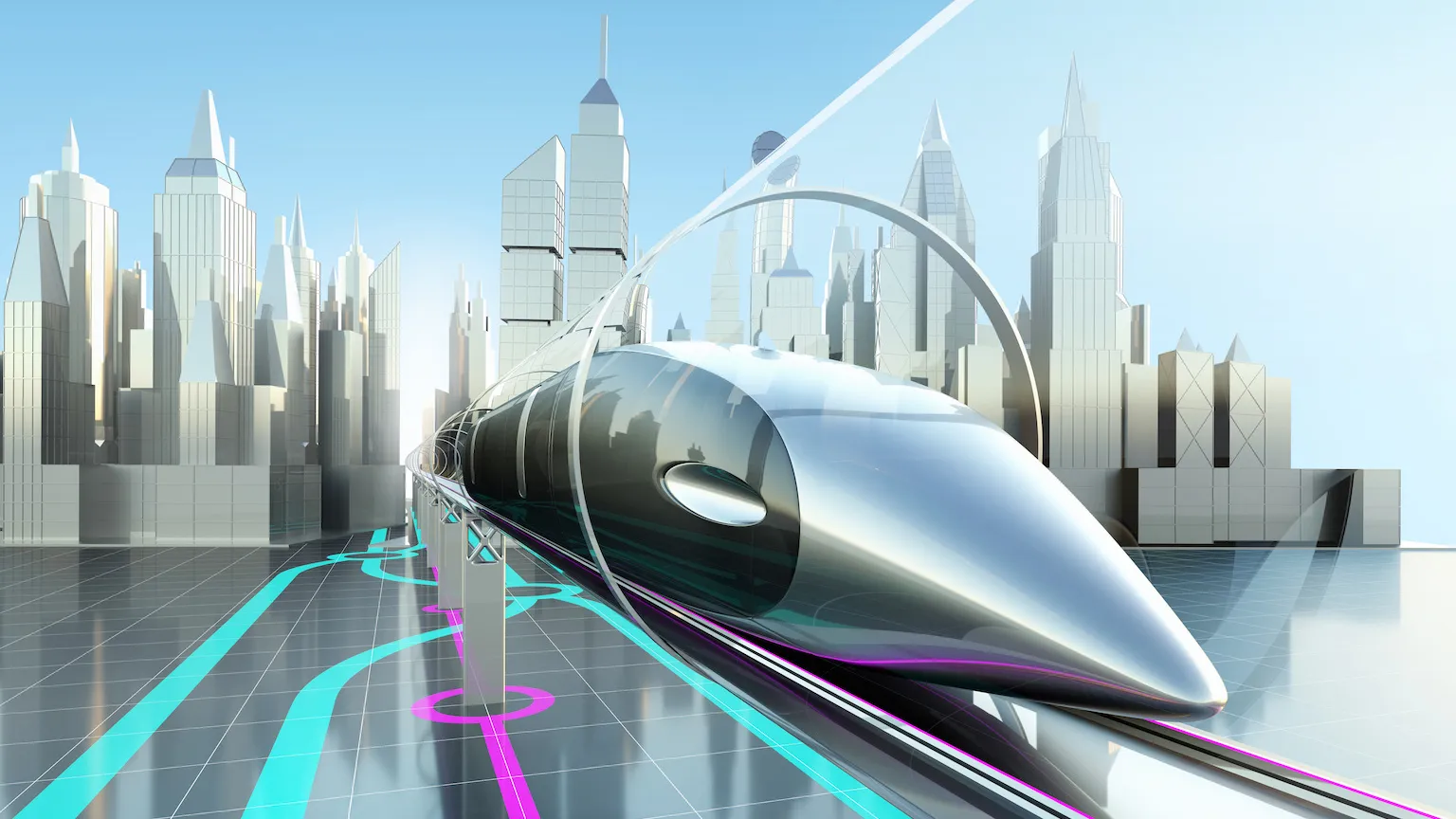
Transforming Fiction into Fact: The Vision Behind New Technologies
The development of a high-speed transportation system through low-pressure environments is not merely a futuristic concept anymore. This innovation stems from the need to revolutionize travel by overcoming traditional obstacles of speed and efficiency.
The Fundamental Framework of the Transport System
The story's roots stretch back to visionary ideas from the past century, where the notion of a "vactrain," or vacuum train, was initially conceived. Bringing this vision to life has required modern advancements and substantial investment in technology. Recently, a wave of interest surged due to a detailed foundational proposal that outlined the mechanics and feasibility of these systems. It catalyzed worldwide interest, with numerous entities eyeing the acceleration of this project from theory to practice.
At its core, the system relies on an intricate network of tubes where the pressure is starkly minimized. Within these tubes, specially designed capsules, or pods, will transport passengers or cargo at unprecedented speeds, rivaling those of commercial jets. Constructing this system involves tackling vast engineering challenges, from perfecting the vacuum conditions to integrating seamless propulsion systems, but the progress is tangible. Moving beyond computer models, several projects worldwide are now focused on establishing physical infrastructure that supports this mode of transit—a system that promises both speed and transformative change in conventional travel logic. By providing weather-resistant, frequent, and on-demand service, the blueprint for future travel is being redrawn.
Overcoming Air Barriers in Velocity
Reducing air resistance is pivotal to achieving high-speed travel. Every moving object, from cars to planes, has to contend with air molecules. This interaction creates drag, which intensifies dramatically with speed. High-speed trains counteract this by using tremendous energy to maintain velocity, while airplanes ascend to heights where the air is thinner and thus less resistant.
In this revolutionary system, a similar principle is used but brought to the terrestrial level by creating a vacuum-like condition. The neat trick here involves using powerful pumps to evacuate the majority of air within sealed tubes, pushing atmospheric pressure drastically lower. This near-vacuum condition minimizes aerodynamic drag significantly. After acceleration, maintaining speed requires considerably less energy, entering what's called the "coast" phase in which hardware demands plummet.
This architectural marvel translates into speeds once deemed impractical for land transport, shrinking intercity commutes to mundane durations comparable to short subway rides. The system’s design further eschews delays and cancellations brought by weather, thanks to its independent and controlled environment, ensuring travel reliability unprecedented in open-air systems.
Magnetic Levitation: A Seamless Method of Travel
A journey without friction is a novel concept. Here’s how magnetic levitation achieves this groundbreaking form of transit.
The Dynamics of Frictionless Journeys
Friction—contact with the ground—is another barrier besides air resistance. For conventional trains, no matter the sophistication of the wheels, friction generates heat and is constrained by mechanical limits. Magnetic levitation technology provides the solution. By employing powerful magnets that induce floating, the transport pods hover above the track, eliminating physical contact.
Two techniques primarily dominate the magnetic approach: active and passive magnetic levitation. Active systems use energy to create lift, while passive systems utilize natural interactions between the track and the vehicle. The latter gains allure for its inherent stability and efficiency—no separate power for levitation is required once in motion.
Floating free from the track eliminates vibrations and minimizes maintenance, fostering a future where infrastructure wears slower and ride comfort vastly improves. When melded with low-pressure tubes, vehicles glide, achieving velocities exceeding those of the highest-speed trains today. This hybrid of technologies mimics flying at ground level, where the old constraints of wheels and tracks vanish, heralding a new era of comfort and speed.
Connecting Modern Transport Methods
A significant shift involves blending these technologically advanced systems with global rail networks. This method proposes a comprehensive integration, building upon existing infrastructure while extending its reach.
Through collaborative efforts between vacuum transit pioneers and established rail organizations, this concept moves beyond mere novelty. Improvements not only promise to redefine our understanding of travel but offer practical benefits in reducing urban congestion and maximizing efficiency.
A focus on interoperability facilitates a hub-and-spoke model where regional train lines feed into major vacuum corridors. This integration averts infrastructural disruption, leveraging present railway corridors while expanding the world’s connective tissue, linking cities as never before.
Environmental Promise: A Sustainable Path Forward
As it stands, this transportation vision aligns with the global mandate for sustainable solutions. The positive environmental impact expected from this system underpins its allure and feasibility.
The Ecological Economy of the System
An emphasis on sustainable operation propels this innovation into future discussions. Its reliance on electromagnetic power systems and low energy consumption aligns it with green technology.
Vacuum environments minimize energy costs, allowing for grand travel at reduced energy expenditures. By ensuring the energy footprint is minimal, these systems are effectively poised to become the preferred alternative to short-haul flights—using less energy while simultaneously reducing noise and emissions levels.
Infrastructure and Future Possibilities
Reference to existing environmental schemes, such as rooftop solar panels on tubes and regenerative braking transforming kinetic energy back into electrical forms, illustrates the technology's commitments to sustainability. By integrating renewable power sources, the systems aim to revolutionize how energy and transport symbiotically interact, ensuring a greener earth alongside faster travel.
Implementing the Dream: Overcoming Development Hurdles
The journey from concept to reality traverses a challenging terrain. Yet, rapid technological advancements provide a roadmap to success.
Development: From Ideas to Concrete Paths
Technological pathways have shifted from speculative sketches to physical implementations in a few short decades. Today, several companies and research bodies globally deploy test tracks to evaluate functionality, revealing not just the feasibility but readiness of these systems.
These test tracks, ranging up to lengths of several kilometers, are proving grounds for theories long untested. They validate the integrity of vacuum systems, the stability of levitation at speed, and how seamlessly these two dynamics integrate. They forward empirical data necessary for long-distance applications, laying the groundwork for urban connectivity in real-world terms.
As the dream of frictionless, air-immune transport solidifies through meticulous testing, the transition to full-scale models looms. The continuous backing by public and enterprise parties positions vacuum-tube mobility not as a competitor to existing forms but an empowerment of our global transit narratives.
Q&A
-
What role do vacuum tubes play in the hyperloop transportation system?
Vacuum tubes are crucial for the hyperloop system as they significantly reduce air resistance. By maintaining a low-pressure environment inside these tubes, hyperloop pods can travel at high speeds with minimal friction, thus enhancing the overall efficiency and speed of the transportation system.
-
How does maglev propulsion work in hyperloop pods?
Maglev, or magnetic levitation, is used to propel hyperloop pods by eliminating direct contact with tracks, reducing friction. The technology involves using powerful magnets to levitate and guide the pods, allowing them to achieve high speeds with smooth and quiet operation. This method of propulsion is key to the hyperloop's ability to provide rapid transit over long distances.
-
What are the benefits of low-pressure travel in hyperloop systems?
Low-pressure travel in hyperloop systems offers several benefits, including reduced aerodynamic drag, which allows for higher speeds and lower energy consumption. This environment enables hyperloop pods to maintain high velocities safely and efficiently, making it an attractive option for long-distance travel compared to conventional transportation methods.
-
What considerations are involved in developing hyperloop infrastructure?
Developing hyperloop infrastructure involves a range of considerations, including engineering challenges related to constructing vacuum-sealed tubes, ensuring structural integrity, and integrating maglev systems. Additionally, environmental impact, land acquisition, and regulatory approvals are significant factors in the planning and implementation phases to ensure the system is sustainable and complies with regional laws.
-
How does high-speed transportation with hyperloop technology compare to traditional rail systems?
Hyperloop technology offers several advantages over traditional rail systems, primarily in terms of speed and efficiency. Hyperloop pods can travel much faster due to reduced air resistance and frictionless maglev propulsion. Additionally, the system promises lower energy consumption and potentially lower operational costs, making it a revolutionary alternative for future transportation needs.