Unlocking Potential Through Imaginative Routines
Youth sports offer more than just a way to release energy; they lay the groundwork for a vibrant and balanced development. Activities ranging from rhythmic floor exercises to strategic outdoor challenges present opportunities for young people to enhance their physical, mental, and emotional capabilities.
Learning Grace and Confidence on the Mat
Children involved in structured programs often develop a blend of confidence and physical aptitude. Close to the heart of this exploration is the journey of self-trust and determination found in managed physical practices, such as those encountered in mats activities that demand both grace and precision. Such environments foster a positive self-image and instill pivotal social skills including collaboration and resilience.
In an environment where youth are encouraged to strive for excellence while learning from mistakes, the inner growth matches their physical accomplishments. This dual development of mind and body nurtures both individual confidence and a communal sensibility, radiating a positive influence far beyond the sport itself.
Building Core Strength Alongside Social Skills
In addition to physical endurance, curated sports activities promote a communal atmosphere where young people are encouraged to connect with peers and work as part of a team. This dual focus on individual and community development teaches children to value and respect diverse abilities and perspectives, thereby fostering a greater sense of empathy and shared success.
Each child's participation becomes an act of learning that occurs on two levels: acquiring personal skills through physical exercises and contributing to the collective dynamic. This synergetic effect ensures that youngsters are not only prepared for the competitive aspects of sports but are also equipped with the life skills necessary to navigate the complex social dynamics of today's world.
Gaining Insight and Strategy From the Field
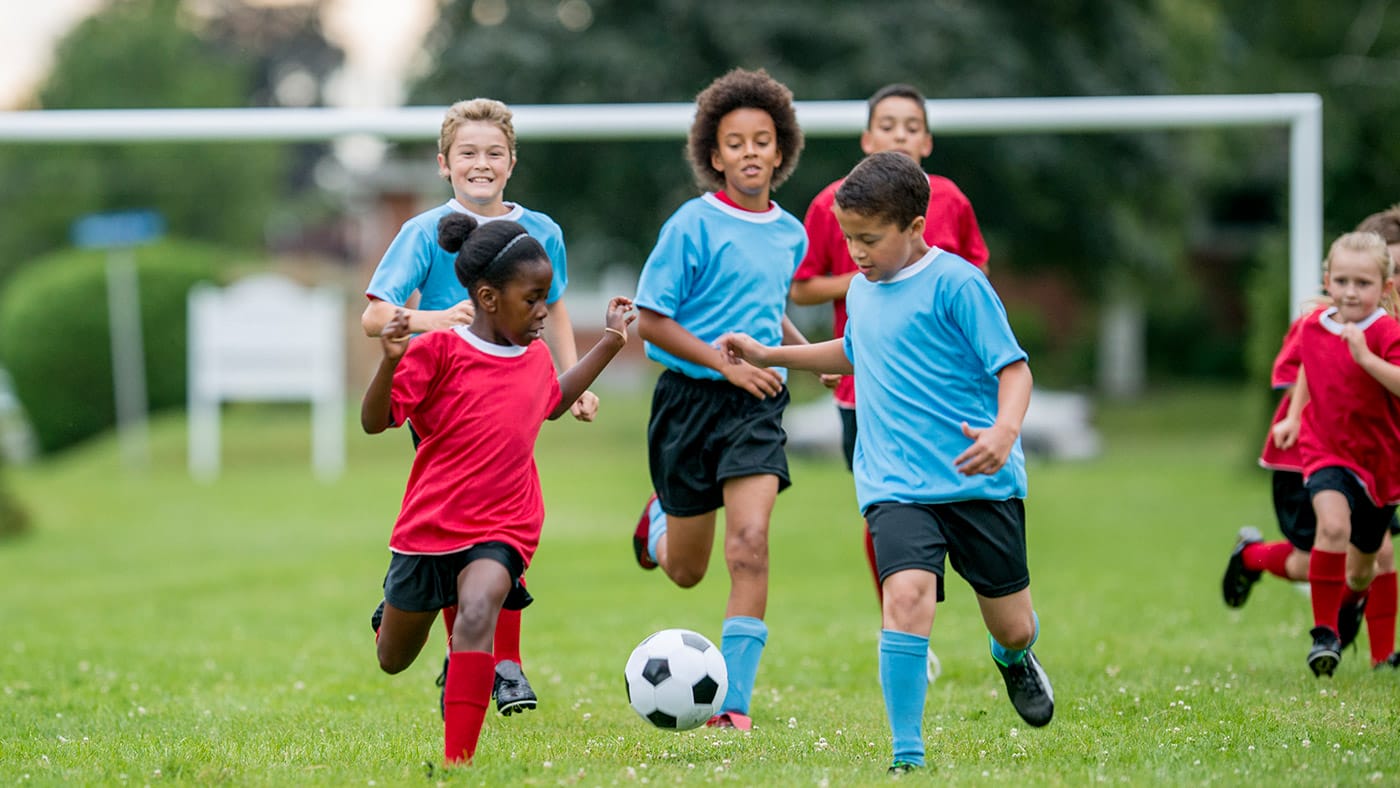
Outdoor sporting arenas, characterized by vast spaces and strategic needs, provide young athletes with the chance to engage in larger team dynamics, hone situational awareness, and adapt strategies to varying scenarios.
Navigating Collective Vibrance in Team Sports
Organized team activities are exemplary in teaching coordination and resilience. Within a large field, the capacity to think on one's feet and act decisively in real-time is cultivated, as athletes engage in robust team play strategies.
Efforts here not only build physical endurance but significantly enhance mental faculties, such as strategic thinking and adaptive problem-solving. Athletes learn to anticipate and respond to rapidly changing dynamics, thus cultivating an intuition that extends into intuitive and agile decision-making.
Finding Purpose in Cooperative Goals
Team sports dynamically demonstrate how individual prowess contributes to a shared objective. Young participants learn invaluable lessons about responsibility and mutual reliance, knowing that each player’s role is critical to the overarching goal.
The vibrant exchange between players during a match highlights the critical role of communication. Alerts and acknowledgments between teammates during play are analogous to real-world coordination required in environments from classrooms to future workplaces, reinforcing the value of expressive and receptive communication.
Endurance and Independence on the Road
Sports that emphasize sustained effort, such as endurance-focused activities conducted on varied terrains, not only build stamina but also teach children the value of perseverance and goal-setting.
Emphasizing Continued Effort and Sustained Growth
The physical demands of sports requiring sustained effort gradually build cardiovascular endurance while promoting healthy lifestyle choices. Persistent effort on the athletic field inculcates habits of resilience and perseverance, with long rides or continuous exercises as practical metaphors for life's longer challenges.
Coaches and mentors emphasize the significance of consistency, not only in practice but also in managing energy levels and recognizing when to push one's limits versus when to conserve for the ultimate challenge. Through this ongoing process, young athletes learn valuable life lessons about balance and self-awareness.
Encouraging Self-sufficiency and Judgment
As young participants engage in challenging outdoor routed activities, they are required to make independent decisions that enhance their situational awareness. This test of autonomy, whether managing a cycle path or cross-country trail, fosters self-reliance and personal accountability.
These skill sets extend well into broader contexts, supporting a child's understanding of safe navigation and decision-making beyond the sports field. This empowerment grants children the confidence to explore independently while remaining conscious of their responsibilities toward others.
Achieving Balance and Coordination in Athletic Spaces
Certain sports require precise coordination and reflexivity, crucial for developing cognitive sharpness and integration of senses during quick movements and decision-making parallels.
Engaging Mental Sharpness with Physical Precision
Fast-paced sports, with their demands for quick thinking and responsiveness, excel in enhancing cognitive focus. The necessity to make split-second assessments, remembering complex plays, and remaining aware of every element within rapid exchanges, sharpens the overall mental acuity.
This immersive environment ensures that athletes experience a constant dialogue between bodily actions and mental calculations, effectively strengthening the brain's executive functions. Through this, young athletes enhance their working memory and multi-tasking abilities, translating to improved academic performance.
Syncing Team Dynamics and Shared Responsibility
Beyond mental and physical enhancements, participants in synchronized team structures acquire intrinsic leadership qualities. By guiding peers or taking charge during crunch moments, participants learn the essentials of leading a team with assurance and empathy.
This imbues young athletes with an understanding of collective responsibility, prompting them to view failures not as personal defeats but as collaborative learning opportunities. Consequently, they foster supportive environments where all participants are motivated to contribute their best efforts toward a shared objective.
Preparing Future Leaders Through Multifaceted Engagement
The ultimate transformation in youth disciplines extends these lessons beyond the sporting domain, crafting well-rounded individuals ready to face broader challenges.
Expanding Leadership Through Active Coaching
Engaging in diverse sports harnesses potential leadership qualities by teaching the fundamentals of leadership in a network of interconnected activities. This training enriches young students not only as future leaders but as engaged citizens within their communities.
A comprehensive sports curriculum is intertwined with personal growth activities that emphasize leadership, integrity, and accountability. This holistic education framework prepares young individuals to take proactive roles both within and outside their sporting lives, demonstrating that meaningful leadership skills translate seamlessly into various aspects of life.
Encouraging Community Involvement and Service
Volunteering initiatives tied to sporting activities promote a strong sense of social responsibility. Grassroots programs encouraging young athletes to give back to their local communities foster a spirit of service that is ingrained and lifelong.
The act of volunteering underscores the principle of reciprocal benefit. Acknowledging their inherent roles both as recipients and providers of support establishes within children an enduring commitment to community welfare, ultimately guiding them toward active citizenship and responsible adult participation.
Q&A
-
What are the benefits of gymnastics for overall fitness?
Gymnastics offers a comprehensive workout that enhances strength, flexibility, and balance. It improves core stability, coordination, and body awareness, making it an excellent foundation for other sports. Additionally, gymnastics can increase mental focus and discipline.
-
How can running events contribute to cardiovascular health?
Participating in running events, such as marathons or fun runs, significantly boosts cardiovascular fitness by improving heart and lung function. Regular running helps reduce the risk of heart disease, lowers blood pressure, and enhances endurance, contributing to overall cardiovascular health.
-
What are the key skills developed in soccer training?
Soccer training hones a variety of skills, including agility, speed, and coordination. It also improves tactical awareness, teamwork, and communication. Players develop endurance and strength through drills and matches, making it a comprehensive physical and mental workout.
-
How do swimming lessons benefit children in particular?
Swimming lessons provide children with essential life skills and promote water safety. They enhance muscle strength, lung capacity, and overall endurance. Additionally, swimming builds confidence, improves coordination, and can be a fun way for children to stay active.
-
What are the advantages of cycling as a form of exercise?
Cycling is a low-impact exercise that is gentle on the joints while providing an excellent cardiovascular workout. It enhances leg strength, improves balance and coordination, and can be an effective way to manage weight. Cycling also offers environmental benefits as a sustainable mode of transportation.
-
Why is basketball training important for developing athletic skills?
Basketball training develops quick reflexes, agility, and hand-eye coordination. It encourages strategic thinking and teamwork, essential components of the game. Players build endurance, muscle strength, and cardiovascular health through regular practice and games.