The Nature of Learning: Outdoor Transformations
The traditional classroom is making room for the vast, dynamic landscapes of the outdoors. When learning spaces transition from four walls to fields and forests, the opportunities for holistic child development grow exponentially. The dynamic interactions between children and nature form a crucial part of developing critical thinking, empathy, and even motor skills.
Intentional Design and Safe Exploration
Designing educational outdoor environments requires intentionality to balance exploration with safety. It's not just about open spaces but carefully curated areas where risk-taking is minimized to safe, manageable levels. A well-executed outdoor area encourages necessary "risky play," vital for understanding personal limits and building physical resilience. Such spaces often include natural elements like climbing frames or balance logs, ensuring children test their limits safely.
Maintenance and thoughtful design also play a role in providing a consistent, stimulating learning environment. In this context, the role of educators extends to accident prevention, which occurs through vigilant oversight and by ensuring equipment and natural elements are free from hazards. Thus, potential behavioral issues are minimized as children remain engaged in engaging and enriching activities.
A naturalistic playground designed with intention becomes a place where children learn life skills subtly yet significantly, contributing to cognitive development and emotional intelligence.
Cultivating a Love for Sustainability
When children spend substantial periods playing out in nature, their relationship with the environment deepens. Concepts of ecology and sustainability no longer remain abstract; children develop a genuine appreciation for the Earth. This is the essence of forest schools, a model gaining traction in English-speaking countries like the UK, the USA, and Canada.
Forest schools bring a holistic lifestyle approach to education by engaging children in activities like planting, observing natural phenomena, or simply caring for a small garden. They invoke a sense of environmental stewardship as children witness their immediate impact on their surroundings. The concept isn't just to educate but to build lifelong habits that emphasize environmental consciousness from an early age.
As children connect their experiences with the planet's rhythms, the hope is that this knowledge becomes the cornerstone of responsible citizenship and eco-friendly living, much needed in today's world facing environmental challenges.
Sensory Development and Cognitive Growth
Engaging with nature significantly influences sensory and cognitive development, harnessing an environment that's constantly changing with every new breeze or cloud pattern. Outdoor settings provide diverse sensory input—like the sensation of bark or the sound of rustling leaves—that enriches cognitive development.
Navigation of uneven natural terrains nurtures physical abilities and encourages understanding physics in a real-world sense. Sorting leaves or stones by color or texture can serve as a practical introduction to mathematics and categorization. These sensory experiences actively shape neural architecture, promoting balance and cognitive flexibility.
Children working collaboratively, like building shelters from fallen branches, simultaneously utilize creativity, physique, and reasoning. This kind of complex engagement lays the foundation for intellectual agility and encourages the discovery of self and surroundings.
Unpacking Play: Child-Led Exploration
Understanding child-led play reveals its indispensable role in cognitive and emotional growth. This approach dismantles the notion of play versus learning, framing them as simultaneously occurring phenomena where children pursue interests naturally.
The Cognitive Process and Enthusiastic Inquiry
Child-led exploratory learning mirrors the scientific method dynamically. Young learners engage in self-directed discovery, using simple activities such as weighing stones or stacking blocks to understand fundamental physical concepts. This independent pursuit builds a foundation for advanced reasoning.
Autonomy forms a cornerstone since it injects intrinsic motivation. When play is self-directed, children’s curiosities drive their engagement, fostering deepened attention and comprehensive problem-solving. Consequently, when children lead, their mental operational capacities flourish, encouraging brain development that is rich, robust, and enduring.
Child-led scenarios epitomize resilience development, where repeated attempts, failures, and perseverance encourage children to view errors as part of the learning process.
The Educator’s Transformed Role
Instead of strict instructors, educators in play-based settings act as facilitators aiding without steering. Recognizing the delicate balance between structure and freedom, they provide subtle guidance to ensure children's activities stay productive, not chaotic.
Educator interventions are thoughtfully timed, often through posing open-ended questions that nudge the child’s learning forward without undermining their autonomy. Such interventions validate learners' perspectives, encouraging innovation by assisting in overcoming temporary hurdles.
Ensuring resources align with children's developmental needs is crucial. These stages involve carefully curating tools that inspire exploration, thus marrying rigor with play and enabling a learning process that flows naturally, guided yet not herded.
Integrating Montessori, Reggio Emilia, and Nature
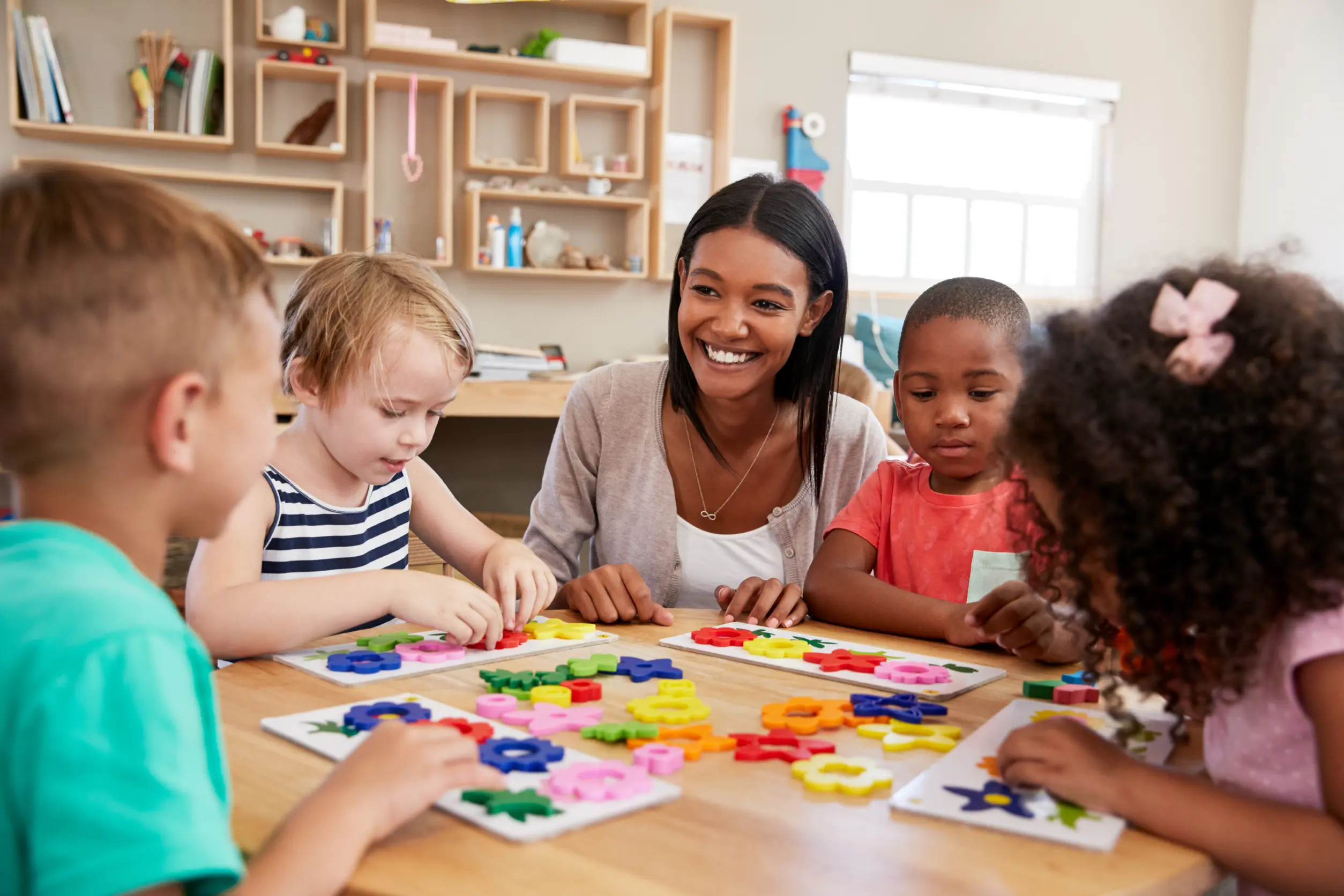
A revolutionary movement in early childhood education blends structured autonomy with community-driven, nature-centric philosophies. The fusion of Montessori's independence-focused framework with Reggio Emilia's emphasis on the community and environment creates an enriched educational tapestry.
Balancing Independence with Collective Learning
The Montessori philosophy focuses on nurturing self-directed autonomy, while Reggio Emilia emphasizes social connections. An integrative approach acknowledges the power of both, using individual independence to fuel group cooperation, evident in numerous projects and classroom activities.
A solitary skill perfected in isolation, such as a child mastering tying shoelaces, finds expression in social projects. Group-oriented tasks like assembling a community art piece call upon collective skills derived from personal progress and enhances cohesive classroom dynamics, underlining the values of social ethics and teamwork.
The Environment as an Interactive Educator
The concept of the "third teacher"—the environment—is realized fully in nature-based settings, creating immersive learning experiences unparalleled by indoor environments. The unpredictable, ever-changing natural setting boosts sensory engagement, enabling deeper cognitive resonance.
Educational spaces that merge with natural elements build a curriculum around the environment, engaging children through multi-sensory learning that emphasizes relationships among earth, community, and self. Such a curriculum proves invaluable in creating a generation knowledgeable about environmental impact.
Furthermore, safety becomes a flexible but solid barrier, differentiating between manageable risks and genuine hazards, fortifying young learners’ problem-solving skills in evaluating risks versus dangers.
Reimagining Childhood: Holistic Strategies
Holistic strategies leverage elements like emotional security, play, nature, and community to foster comprehensive childhood development. Integrating these aspects provides a broad framework ensuring future readiness where children are well-rounded individuals capable of facing life's varied challenges.
Emotional and Social Resilience Foundations
Social-emotional learning stands critical in resilience development, empowering children with essential tools for interaction, empathy, and emotion regulation. Simple social interactions during play teach children critical life lessons, forming the bedrock of healthy emotional and social intelligence.
Establishing nurturing environments that accommodate these interactions illuminates the pathways for children to develop skills necessary for thriving both academically and socially, reinforcing values appreciated throughout life stages.
Educator Well-being and Educational Efficacy
Educator mental health significantly impacts the emotional tone within classrooms, influencing children's social-emotional growth. Mentally healthy educators foster a supportive learning atmosphere, offering patience, empathy, and enacting role model behaviors for emotional mastery.
By acknowledging the interplay between educator well-being and educational outcomes, systemic changes and policies stressing teacher support play a critical role in achieving holistic developmental goals in children.
Undoubtedly, the convergence of these educational philosophies spells a promising landscape for early childhood education, nurturing mind and spirit, preparing children for a rapidly changing future.
Q&A
-
What is the Montessori Method for Toddlers and how does it benefit early childhood development?
The Montessori Method for Toddlers emphasizes child-centered learning, allowing children to explore and learn at their own pace. This approach benefits early childhood development by fostering independence, improving fine and gross motor skills, and encouraging problem-solving abilities. It provides a prepared environment with age-appropriate materials that support sensory development and language skills.
-
How does the Reggio Emilia Approach differ from traditional preschool programs?
The Reggio Emilia Approach is distinguished by its focus on child-led projects and the belief that children are capable of constructing their own learning. Unlike traditional preschool programs that may follow a set curriculum, Reggio Emilia encourages exploration and expression through art, dialogue, and collaborative problem-solving. This approach values the role of the environment as the "third teacher" and emphasizes community involvement.
-
What are the key features of Nature-Based Preschool Programs?
Nature-Based Preschool Programs integrate outdoor experiences into the daily curriculum, emphasizing the importance of nature in learning. Key features include outdoor classrooms, unstructured play, and activities that promote ecological literacy. These programs aim to develop a child's physical, emotional, and cognitive skills while fostering a deep connection to the natural world.
-
How do Forest Schools for Kids enhance learning experiences compared to indoor classrooms?
Forest Schools for Kids offer unique learning experiences by immersing children in natural environments. These schools enhance learning by promoting resilience, creativity, and teamwork through activities like building shelters, exploring ecosystems, and engaging in physical challenges. This approach encourages risk-taking, improves physical health, and nurtures a lifelong appreciation for nature.
-
What is an Emergent Curriculum and how is it applied in Play-Based Learning Strategies?
An Emergent Curriculum is a framework that builds upon the interests and ideas of the children, allowing for flexibility and adaptability in lesson planning. In Play-Based Learning Strategies, this curriculum is applied by observing children's play and interactions, then using these observations to guide educational activities. This approach supports personalized learning experiences and fosters creativity and critical thinking skills.