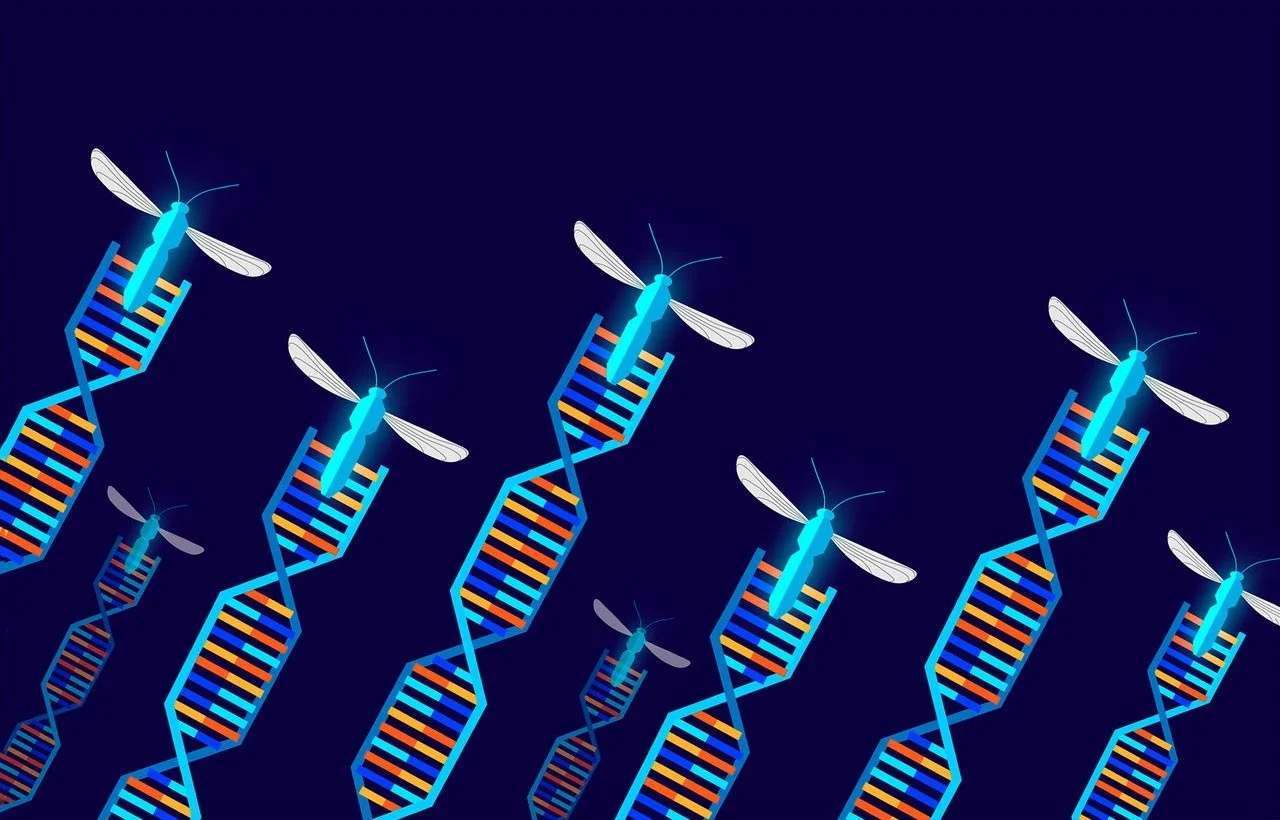
Understanding Gene Drives: Pioneering Genetic Inheritance Manipulation
The scientific community has long been fascinated by the possibility of controlling the basic principles of genetic inheritance. Gene drives represent a revolutionary shift, fundamentally altering the traditional rules that govern how traits are passed down through generations. This section explores the essence of how gene drives operate, allowing certain genes to spread rapidly through wild populations.
The Mechanism of Biased Inheritance
At the heart of a gene drive is its ability to bend the rules of classic Mendelian genetics. Under normal circumstances, each parent passes on one of their two alleles for a given gene, resulting in a 50% chance for an offspring to inherit any specific allele. This equitable distribution maintains genetic diversity within a population. Gene drives, however, circumvent this balance by ensuring that a particular genetic variant is prevalently inherited, thus magnifying its representation in successive generations.
This engineered bias is achieved through a mechanism called "homing." This process involves cutting the DNA at a precise location and utilizing the cell’s natural repair mechanisms to copy the gene drive element into the chromosome. When successful, this "homing" process guarantees that nearly all offspring carry the gene drive, not merely a 50% share. This type of super-Mendelian inheritance can be harnessed to propagate traits such as pesticide resistance or sterility among pest species, thereby providing a potential tool for population control and pest management.
The implications for biodiversity are profound. By altering inheritance in this way, gene drives offer the power to change population dynamics dramatically, addressing issues like invasive species management by accelerating the spread of genes that suppress reproduction or lessen competitiveness.
CRISPR: The Cutting-Edge Tool Reshaping Ecosystems
CRISPR-Cas9 technology has emerged as a versatile tool, not only transforming medical genetics but also redefining ecological management practices. In this section, we explore the potential of CRISPR as it applies to environmental challenges, focusing particularly on controlling and reshaping ecosystems.
Precision in Gene Editing and Ecosystem Impact
CRISPR-Cas9 provides a method for making precise edits to a genome, enabling the creation of synthetic gene drives. These drives are capable of altering populations through specific genomic changes aimed at traits that would control or suppress species. For instance, by targeting the reproductive capabilities of invasive species, CRISPR-facilitated gene drives can potentially curb their populations without resorting to chemical controls.
The ecosystem-level impact of employing CRISPR and gene drives is profound. For example, changes at a gene level can affect entire populations of insects or plants, presenting opportunities to foster ecological balance. A critical application lies in the realm of public health, where modifying mosquito populations to prevent them from carrying diseases like malaria could reduce infection rates significantly. Similarly, in agriculture, CRISPR can modify pest species to reduce damage to crops while minimizing the ecological footprint of pest control measures.
While the potential benefits are compelling, the use of CRISPR is not without challenges. Ethical considerations must be accounted for, particularly regarding unintended ecological consequences. Changes in one organism can have cascading effects throughout an ecosystem, affecting species interactions and biodiversity.
Successes and Challenges: Real-World Applications of Gene Drives
The application of gene drives promises significant advancements in addressing ecological issues, yet it also carries risks and uncertainties. This section delves into real-world examples to illustrate the potential and challenges of applying gene drives in ecosystem management.
Lessons from Field Studies and Laboratory Trials
Field trials and laboratory studies have provided valuable insights into the feasibility of gene drives. One prominent example is the modification of mosquito populations to combat vector-borne diseases. Laboratory trials successfully demonstrated that gene drives could reduce or even eliminate disease vectors. However, scaling these findings to uncontrolled natural settings remains fraught with challenges, including ecological complexity and the potential for unintended consequences.
One critical learning point from these applications is the emergence of resistance. Insects, for instance, may develop genetic mutations that render them immune to the intended effects of a gene drive, diminishing its efficacy over time. This resistance phenomenon requires ongoing monitoring and adaptation of gene control strategies to ensure sustained impact.
In addition to resistance, another challenge is ecological stability. The ecosystem is a complex web of interactions, and altering one part of this system can have unforeseen impacts on the entire environment. For instance, reducing a pest population might benefit crops but could disadvantage predators or other wildlife that depend on that pest for food.
Ethical Considerations: Building Regulatory and Social Frameworks
Gene drives are a powerful tool with far-reaching effects, necessitating careful ethical consideration. Understanding and addressing the ethical implications are crucial to ensuring responsible use.
A Framework for Global Ethical Dialogue
The deployment of gene drives across ecological boundaries raises significant ethical questions—who decides where and how these technologies are used, and what global guidelines should exist? Cross-border implications mean global cooperation is essential. Stakeholders, including scientists, policymakers, local communities, and environmental groups, must engage in transparent dialogues to weigh both the benefits and risks.
This dialogue should emphasize equitability and justice. The regions most impacted by diseases or invasive species may lack the resources or governance structures to oversee or manage gene drive deployment responsibly. It is imperative to ensure these areas are not merely passive fields for technological testing but active participants in decision-making. Such a framework would help build trust, addressing fears about unforeseen impacts and governance without representation.
Scientists and policymakers must also ensure there are rigorous oversight frameworks in place to handle ethical dilemmas and unintended consequences. These frameworks should feature fail-safes to halt gene drives if negative outcomes begin to emerge, ensuring the technology can be contained and reversed if necessary.
The Future of Gene Drives
The intersection of technological ambition and ecological preservation is complex, with gene drives standing at this nexus. As we navigate this promising, yet precarious path, our goals must be tempered with responsibility and an appreciation for the intricate tapestry of life with which we interact.
Gene drives hold the potential to reshape our interaction with nature fundamentally—but they demand a whole new level of stewardship from those who wield them. Thoughtful implementation, robust scientific evaluation, and thorough ethical consideration will be crucial in harnessing these tools for positive ecological change.
Q&A
-
What is the role of CRISPR gene drives in genetic inheritance control?
CRISPR gene drives are a powerful tool in genetic inheritance control as they can bias the inheritance of specific genes to increase their prevalence in a population. This technique can be used to spread genetic modifications rapidly through wild populations, potentially controlling or eliminating invasive species or undesirable traits. -
How can invasive species management benefit from synthetic organisms?
Synthetic organisms can be engineered to target and suppress invasive species, either by directly competing with them or by introducing genes that reduce their reproductive success. This approach can be more targeted and environmentally friendly compared to traditional methods such as pesticides or culling. -
What are the ethical considerations of using gene editing for wildlife population control?
Using gene editing for wildlife population control raises several ethical issues, including the potential impact on ecosystems, the welfare of individual animals, and the irreversible nature of genetic changes. It is crucial to balance the benefits of controlling problematic species with the preservation of biodiversity and ecosystem health. -
In what ways can CRISPR gene drives contribute to the management of wildlife populations?
CRISPR gene drives can be designed to control wildlife populations by reducing fertility, altering sex ratios, or spreading genes that increase susceptibility to certain diseases. This can help manage overpopulated species or those that are vectors for diseases, ultimately aiding in the restoration of ecological balance. -
What potential risks are associated with the use of gene editing technologies in wildlife management?
Potential risks include unintended ecological consequences, such as disruption of food chains or loss of genetic diversity. There's also the risk of edited genes spreading beyond target populations, leading to unforeseen environmental impacts. Thorough risk assessments and controlled trials are necessary to mitigate these concerns.